Bike Stand Company
Company
Shop By Category
T&Cs
Shop Online
  • Free delivery all over New Zealand on orders of $75 or more
  • Wall racks, floor stands, work stands and accessories in one place
  • Dispatch within 2 working days, then delivery in up to 7 working days by tracked courier
  • Tracking number emailed as soon as your order ships

Mini Bike Pump | Portable Bike Pump | Presta And Schrader Pump

Mini Bike Pump

$77.99 $93.99 Save $16
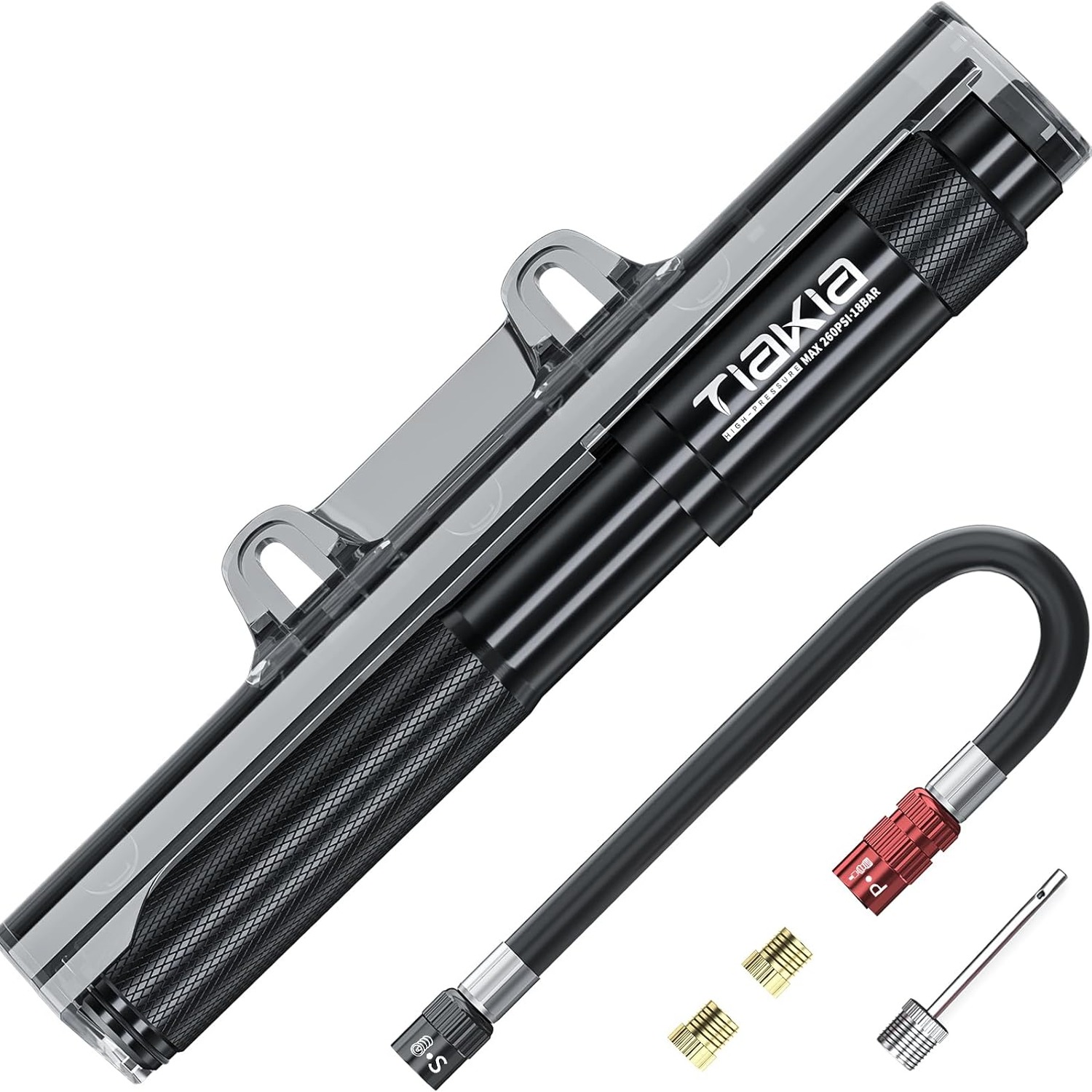
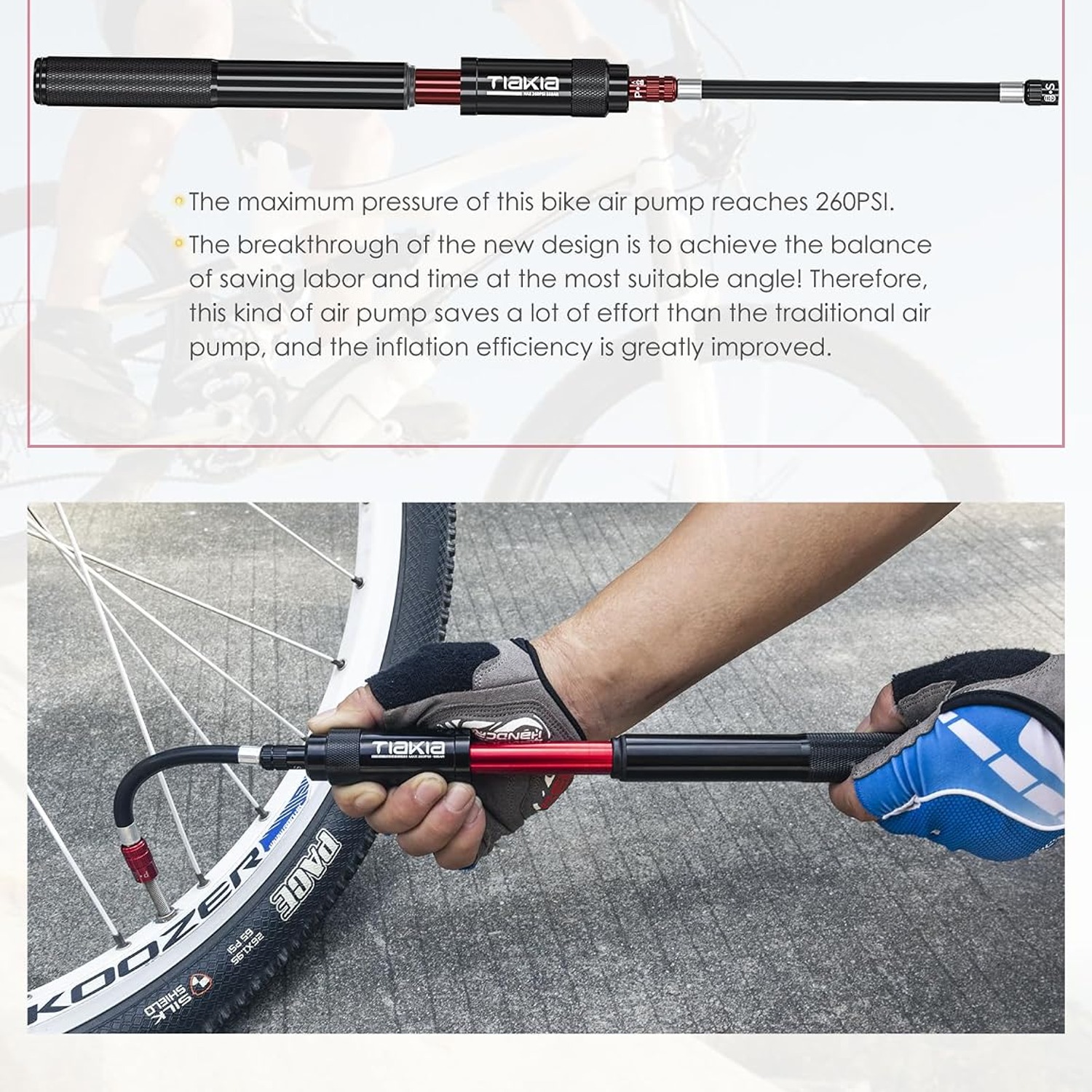
  • 260 PSI Rated
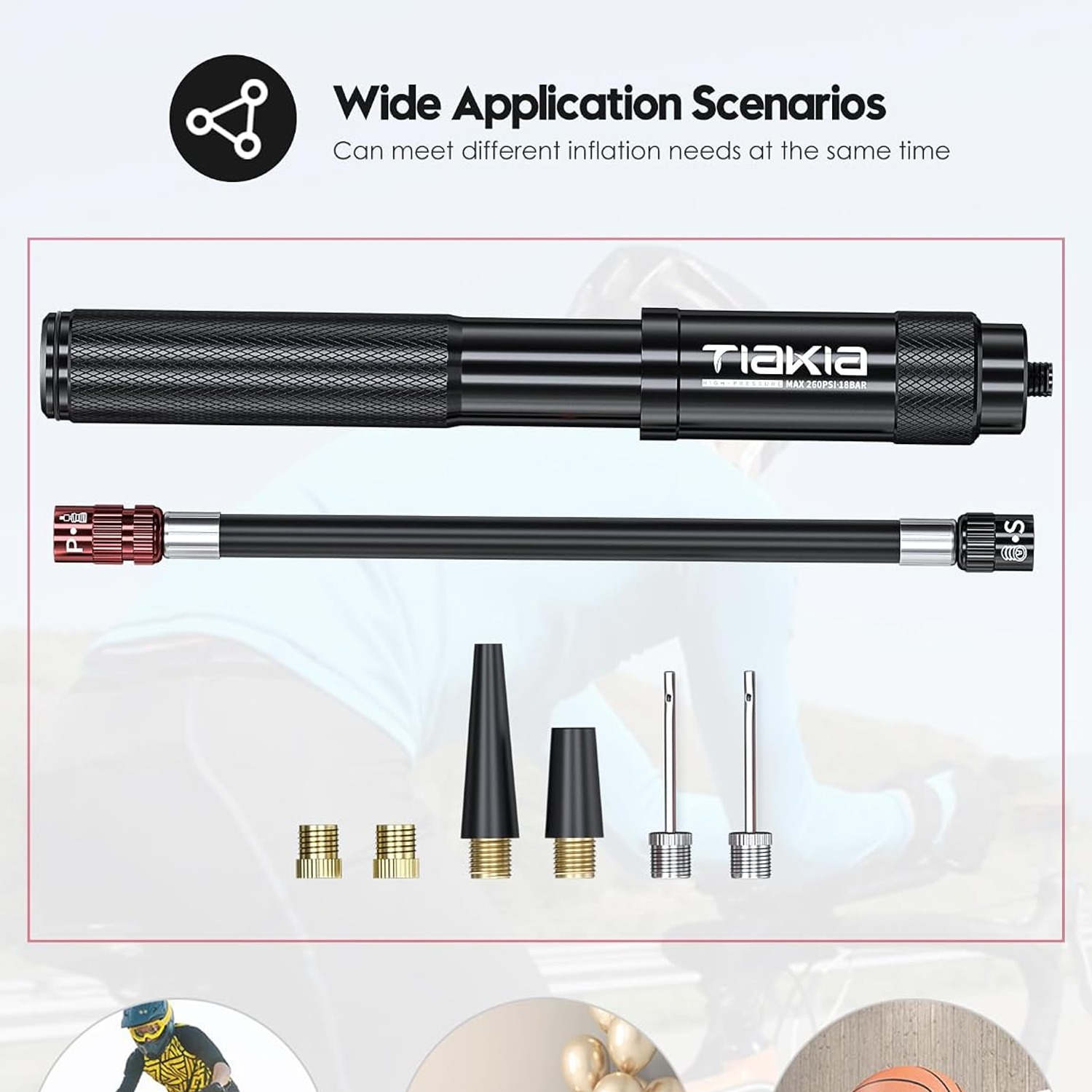
  • Two Valve Heads
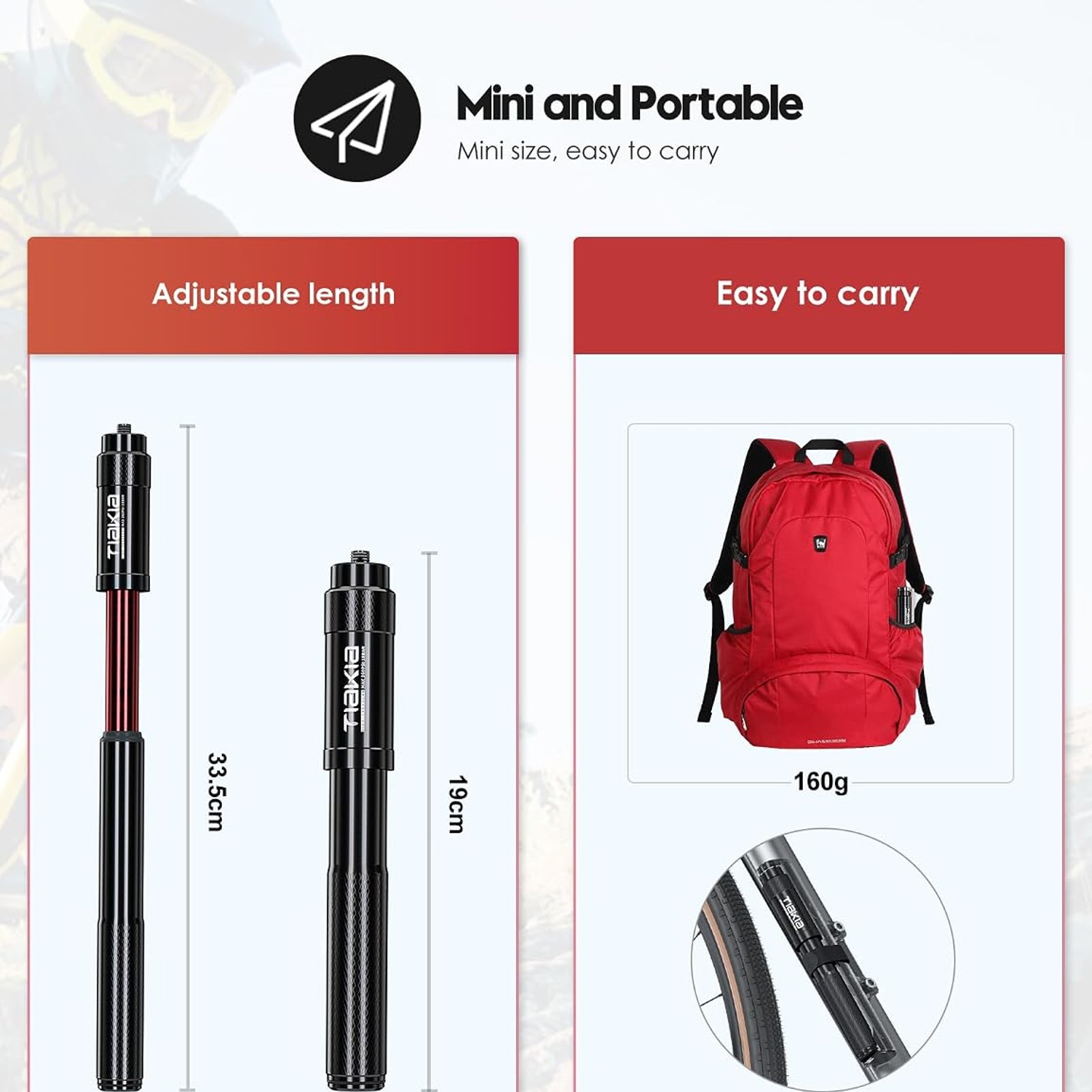
  • 205 g Carry Weight
  • Aluminium Body

Price: $77.99 $93.99

  • Delivery time: up to 7 working days by tracked courier, after dispatch within 2 working days
  • Free delivery all over New Zealand on orders $75+, otherwise a flat $25
  • Pay by card or PayPal, handled by the payment provider
  • 15 days to change your mind, plus your Consumer Guarantees Act rights
Product specifications
Power SourceHand pump (manual)
Operation ModeManual
Maximum Pressure260 PSI
Air Flow CapacityAbout 44 ml per stroke
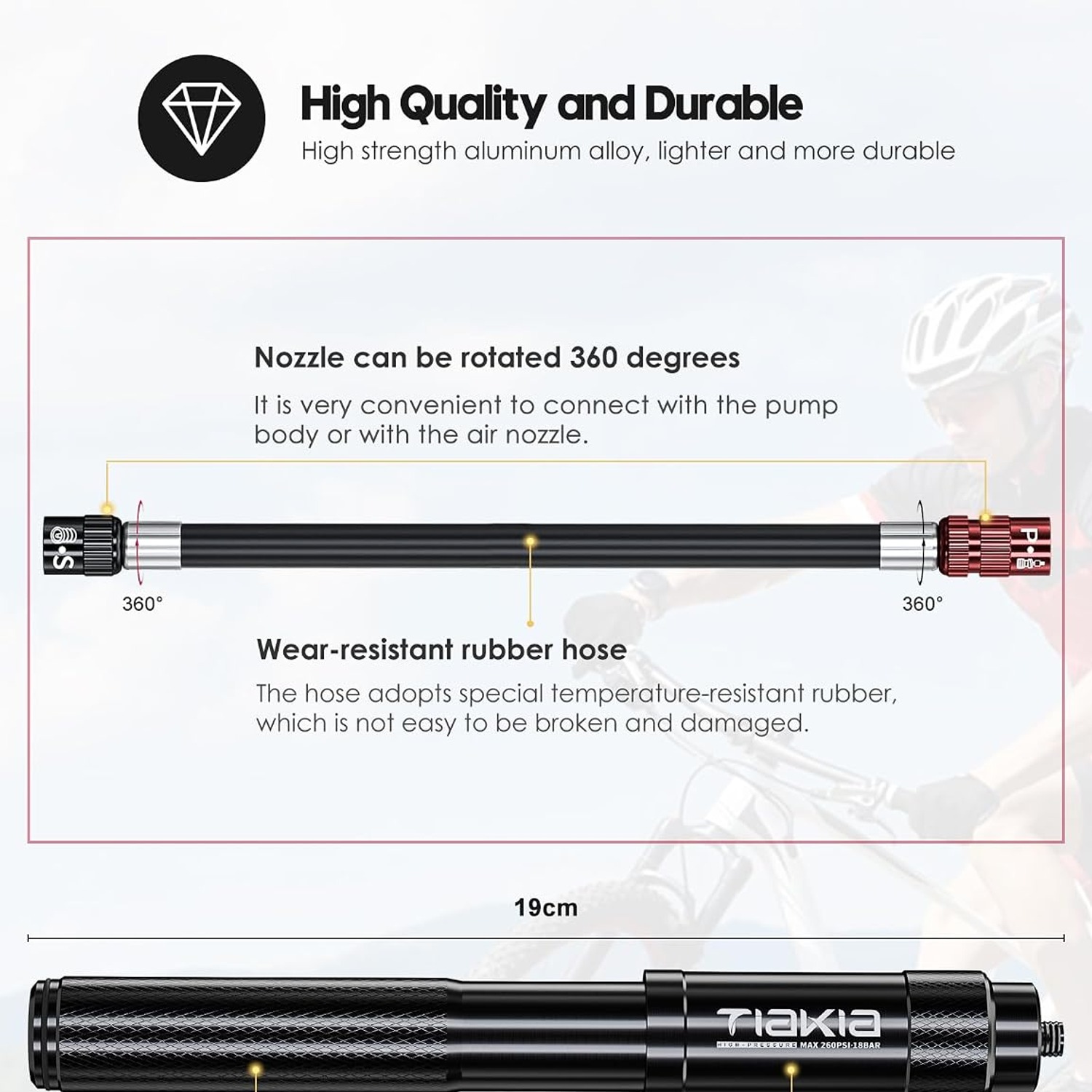
Hose Length12.7 cm
Valve CompatibilityPresta and Schrader dual head
Item Weight205 g
MaterialAluminium and metal
ColourBlack
Weight205 g
Shipping & returns

Tracked delivery anywhere in New Zealand. It is free on orders of $75 or more, and a flat $25 below that. Allow up to 7 working days in transit after dispatch within 2 working days.

This shop's own returns policy gives you 15 days from purchase to change your mind, on every product it sells. Send it back in its original packaging with proof of purchase and we refund the price you paid for the goods, processed within 24 to 48 hours of the return arriving. You cover the cost of returning it unless the item is faulty.

If it arrives faulty, damaged or not as described, we put it right at no cost to you under the Consumer Guarantees Act 1993, return postage included.

Shipping details · Refunds and returns

260 PSI RatedEnough pressure for narrow road tyres, not just soft knobbies.
Two Valve HeadsFits Presta and Schrader without swapping any parts.
205 g Carry WeightLight enough to live in a pocket, pack or frame mount.
Aluminium BodyAnodised alloy barrel built to take knocks and road grime.

Carry a mini bike pump that fits in a jersey pocket and gets you rolling again in minutes.

An aluminium hand pump rated to 260 PSI with a dual Presta and Schrader head, a flexible 12.7 cm hose and a frame mount, so a flat tyre never ends the ride.

A mini bike pump that fits a bottle cage mount yet reaches a claimed 260 PSI, so you can get a road tyre back to a usable pressure by hand.

The dual head accepts both Presta and Schrader valves, which means one pump covers road bikes, mountain bikes, kids' bikes and most e-bike or scooter tubes.

A 12.7 cm flexible hose takes the strain off the valve stem, so you are not levering a brittle Presta core sideways while you pump.

At 205 grams the whole pump disappears into a jersey pocket, saddle bag or commuter bag without weighing you down.

The aluminium body and metal internals are made to survive being bounced around in a bag ride after ride.

Mini Bike Pump

A flat tyre is rarely dramatic. It is just slow, awkward and badly timed, usually a few kilometres from anywhere useful. The point of a mini bike pump is not to replace a floor pump at home, it is to put enough air in a tube to ride back in comfort instead of walking.

Mini Bike Pump

Pressure is where small pumps usually disappoint. A pump that tops out near 60 PSI is fine for a fat mountain tyre and useless for a 25 mm road tyre, which wants to be somewhere up around 90 to 100 PSI before it feels right. This pump is rated to 260 PSI, which is well above anything you would ever run in a bicycle tyre. In practice that headroom is what lets you keep making progress in the last stretch of pumping, when the resistance climbs and a weaker pump simply stalls.

Mini Bike Pump

The head takes both Presta and Schrader valves without adapters to lose, and a Dunlop conversion valve is listed among the supported types. That matters in a shared household. One pump handles the road bike with its slim Presta stems, the kid's bike on Schrader, the commuter, and with the right nozzle a football or a pool float as well. Fewer parts to hunt for in a hurry.

Mini Bike Pump

The 12.7 cm hose is a small design choice that makes a real difference. Pumping directly onto a valve puts a side load on the stem every stroke, which is exactly how people snap Presta cores or tear the valve away from the tube. With a short hose you brace the pump against the ground or your knee and the valve just sits there. It also makes rear wheels easier, where the cassette and chainstays crowd the valve.

Mini Bike Pump

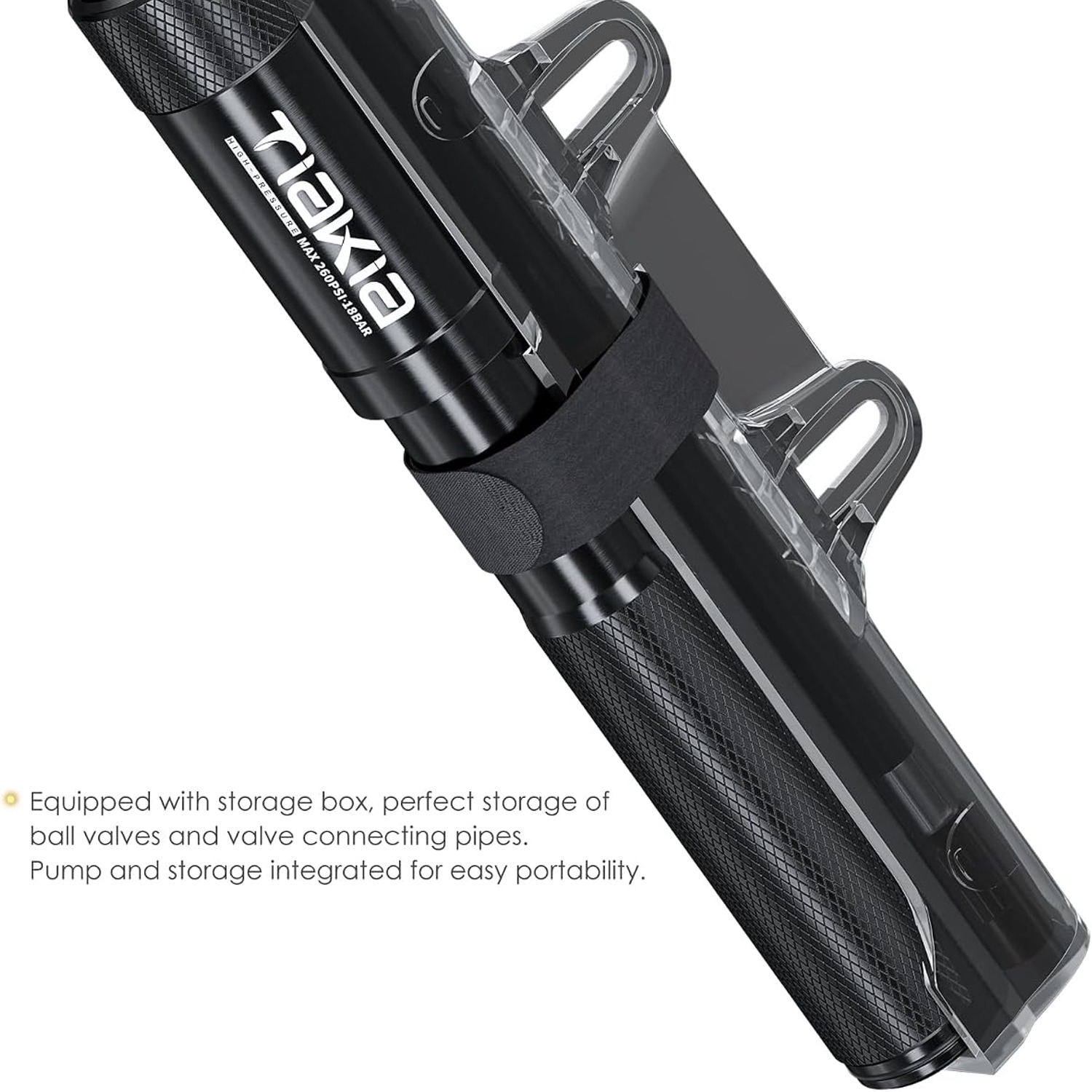
Weight and mounting round it out. At 205 grams the pump is light enough that you stop noticing it, and the included bracket lets it sit under a bottle cage or on the frame so it is never the thing you forgot. The anodised aluminium surface resists corrosion and scuffs, and the hose is a high pressure rubber type. Keep it dry after a wet ride and it should just keep working.

What do our customers say?

Company-wide reviews published on Trustpilot. Every public rating is included.

3.6 Based on 19 reviews Trustpilot

All 19 public reviews are shown without a star-rating filter. See the live profile on Trustpilot.

Not sure yet? That is fine.

You can change your mind. This shop's own returns policy gives you 15 days from purchase to send it back in its original packaging with proof of purchase, and we refund the price you paid for the goods.

If it turns up faulty, damaged or not as described, that is on us. The Consumer Guarantees Act 1993 covers you, we pay the return postage, and you can have a repair, a replacement or your money back. Read the full detail on our refunds and returns page, or ask us anything before you order.

Frequently Asked Questions

What is this product?

It is a mini bike pump, a compact hand pump you carry with you to reinflate a tyre away from home. It has an aluminium body, a short flexible hose and a head that fits both Presta and Schrader valves. The pump weighs 205 grams.

How much pressure can it reach?

The pump is rated to a maximum of 260 PSI. That is far above normal bicycle tyre pressures, so you have plenty of headroom for narrow road tyres that need 90 PSI or more. The rating is about capability, not a target.

Does it work with Presta valves?

Yes. The head is a dual Presta and Schrader design, so you do not need a separate adapter for Presta. Remember to unscrew the small brass nut at the tip of the Presta valve before you attach the hose.

Does it work with Schrader valves?

Yes. Schrader is the wider car-style valve used on most kids' bikes, many mountain bikes and plenty of e-bikes. The same head accepts it, which is what makes this one of the best presta valve pump options for mixed households.

Can it inflate Dunlop valves?

Dunlop valves are listed among the supported types with a conversion valve. Dunlop is common on some older city and utility bikes. Check that the conversion piece is in the box before you rely on it.

How long is the hose?

The hose measures 12.7 centimetres. That is short enough to pack away neatly and long enough to keep sideways force off the valve stem while you pump.

Why does a hose matter on a small pump?

Pumping straight onto a valve rocks the stem back and forth with every stroke, which is a common way to break a Presta core or tear a tube at the base. A hose lets the pump body move while the valve stays still. It also helps on rear wheels where space is tight.

How heavy is it?

205 grams. That is light enough to carry in a jersey pocket, a saddle bag or a backpack without really noticing it.

Can I mount it on my bike?

Yes, it is designed to mount to the frame, typically under a bottle cage using the supplied bracket. Mounting it means the pump travels with the bike rather than being left behind. Check the bracket bolts occasionally so nothing rattles loose.

How many pumps does it take to inflate a road tyre?

That depends on tyre volume and your target pressure, and a small pump always takes more strokes than a floor pump. The listed air flow is about 44 ml per stroke. Expect a few minutes of steady work to get a 700c road tyre to a rideable pressure.

Is it suitable for mountain bike tyres?

Yes. Mountain tyres hold more air but need much lower pressure, so the work balances out. For the best mountain bike hand pump experience, aim for a pressure you can ride home on rather than a perfect trail setting.

Will it work on an e-bike or scooter tyre?

It should, as long as the valve is Presta or Schrader, which covers most of them. Scooter and e-bike tubes are usually small volume, so they fill quickly. Always check the pressure stamped on the tyre sidewall.

Can I use it on car tyres?

It will fit a Schrader car valve physically, but a hand pump is not realistic for the volume of a car tyre. Use it for emergency topping up of a very soft tyre at best. A powered compressor is the right tool for cars.

Does it work for sports balls?

Yes, with a needle adapter fitted to the head. It is often used as the best pump for sports balls in a household that already owns it for bikes. Pump slowly so you do not over-inflate.

Does it have a pressure gauge?

No gauge is listed in the product details for this model. You judge pressure by feel on the road and check it properly with a gauge or floor pump at home. For most riders that is fine for a get-home pump.

How do I know when the tyre has enough air?

Squeeze the tyre firmly between thumb and fingers. A road tyre should barely deform, a mountain tyre should give a little. If you can press the sidewall in easily, keep pumping.

What is the pump made from?

The body is aluminium with metal components, finished in black. Aluminium keeps the weight down while still coping with being knocked around in a bag.

Is it waterproof?

Treat it as splash tolerant rather than waterproof. Dry it after wet rides and store it indoors.

Does it come with anything else in the box?

The listing is for a single pump, one unit per pack. Mounting hardware and valve conversion pieces are described in the product information.

What size is the pump overall?

It is described as a compact pump sized to mount under a bottle cage. The confirmed figures are a 205 gram weight and a 12.7 cm hose.

Is it hard to use?

No. Open the head, fit it to the valve, lock the lever if yours has one, then pump with both hands while bracing the pump against the ground or your leg. A few minutes of steady strokes is normal.

Why does the pump get warm?

Compressing air generates heat, and a small barrel heats up faster than a big one. A warm pump body after inflating a tyre is normal. Let it cool before packing it away tight against your leg.

How do I look after it?

Wipe it down after wet or muddy rides and store it dry. Keep grit away from the valve head by covering it when stowed. Avoid forcing the handle beyond its stop.

Can I leave it mounted on the bike all the time?

Yes, that is the point of the bracket. If you park outside a lot, consider taking it off, since a mounted pump is easy for someone to pocket. Check the mount fasteners every few weeks.

Will it fit in a jersey pocket?

Yes. At 205 grams and compact size it sits comfortably in a rear jersey pocket, a saddle bag or a hip pack. That makes it a practical choice as the best bike pump for commuting.

Do I still need a floor pump at home?

Ideally yes. A floor pump with a gauge makes weekly pressure checks quick and accurate. A mini pump is for emergencies and top-ups on the road, not for daily use.

Is this a good gift for a cyclist?

It is a sensible one. Most riders never get around to buying a decent compact pump for themselves, and a dual-head model suits most bikes they own. Pair it with tyre levers and a spare tube for a complete kit.

How long will delivery take?

We dispatch within 2 working days. Delivery then takes up to 7 working days by tracked courier, anywhere in New Zealand. It is free on orders over $75 and a flat $25 below that, shown in your basket before you pay. You get tracking details by email once the parcel is dispatched.

What is the returns policy?

Unused items in original condition can be returned within the published returns window shown at checkout. Contact support first so we can issue return instructions. Keep the packaging until you are sure the pump suits your bike.

What if it is not right for me?

Get in touch and tell us what did not work, whether it is the valve fit, the size or the effort needed. We will help you find a better match in the range or arrange a return under the standard policy. Nobody benefits from a pump sitting unused in a drawer.

How to Choose a Mini Bike Pump That Actually Gets You Home

6 min read Bike Stand Company

The problem with being five kilometres from home

Flat tyres do not announce themselves. One minute you are rolling, the next the back end feels vague and the rim starts tapping over every seam in the road. If you are lucky you have a spare tube and levers. If you are unlucky you also have no way to put air in once the tube is swapped, and that is a long walk in cycling shoes.

That is the entire reason a mini bike pump exists. It is not trying to be a workshop tool. It is trying to turn a ride-ending flat into a fifteen minute delay. Judged by that standard, the things that matter are fairly simple: can you carry it without resenting it, does it fit your valve, and does it move enough air to get a tyre firm rather than merely inflated.

How a hand pump actually works

Inside the barrel there is a piston with a seal. Push the handle in and the air ahead of the piston gets squeezed, and when its pressure exceeds what is already in the tube, a one-way valve opens and some of it moves across. Pull the handle back and the chamber refills. Repeat a few hundred times and your tyre is hard.

The catch is that as tyre pressure climbs, the resistance on the handle climbs with it. This is why cheap pumps feel fine for the first thirty strokes and then seem to stop making progress. You are still pushing, but the pump cannot overcome the pressure already in the tube. A pump rated to 260 PSI has enormous margin over any bicycle tyre, and that margin is what keeps the last stretch of pumping productive instead of futile.

Air flow matters just as much. A pump that moves more air per stroke gets you there in fewer strokes. The figure quoted for this model is about 44 ml per stroke. Narrow barrels build high pressure easily but shift little air. Wide barrels shift lots of air but run out of puff early. The trick is finding something that does enough of both, and a separate hose helps by keeping the valve connection stable while the barrel does its work.

Valves, and why they keep catching people out

There are two common valve types on bikes, plus one that shows up in certain countries. Presta is the thin one with a little brass nut at the tip that you unscrew before pumping. Schrader is the fat one that looks like a car valve. Dunlop is the odd one out, common on some older city bikes.

A dual-head pump fits both Presta and Schrader without you needing to carry an adapter, and this one supports Dunlop with a conversion piece too. If your household has a road bike, a kid's bike and something for the shops, you almost certainly have at least two valve types between them. A single pump that covers all of them is simply less to think about. This is what makes a presta and schrader pump the sensible default rather than a specialist choice.

One habit worth building: always unscrew the Presta nut fully before attaching the pump, and always screw it back down afterwards. A loose nut lets air seep out slowly over days, and you will blame the tube.

The hose is not a gimmick

Plenty of mini pumps push straight onto the valve with no hose. They work, but they put every stroke of side load into the valve stem. Presta stems are thin brass and they do not love this. Enough wiggling and either the core loosens or the tube tears where the valve is bonded in. Either way, you now have a second flat and you used your spare.

A short hose, in this case 12.7 centimetres, separates the two. The head clamps onto the valve and stays there. The pump body moves freely in your hands, braced against the ground or your thigh. Rear wheels are the obvious beneficiary, since the cassette, chainstays and disc rotor all conspire to leave almost no room for a pump body next to the valve.

Who this suits

Road riders get the most obvious benefit, because road tyres need real pressure and most compact pumps cannot deliver it. If you run 28 mm tyres at 80 PSI, a pump with plenty of pressure headroom turns a frustrating job into a manageable one.

Commuters benefit differently. Their priority is that the pump is always there. A frame bracket means it rides with the bike, so you are not remembering to transfer it between bags. For anyone looking at the best bike pump for commuting, mounting options matter more than raw numbers.

Mountain and gravel riders need volume over pressure, and a trail tyre at 25 PSI fills quickly. Parents get use out of it too, since kids' bikes almost always run Schrader and almost always run soft. And if there is a football or a pool ring in the garage, a needle adapter makes the same pump useful there.

How to choose between options

Start with your valve type, because a pump that does not fit is worthless no matter how good it is. Then look at weight, since anything over about 250 grams starts to feel like luggage in a jersey pocket. Then look at pressure rating, which matters in direct proportion to how narrow your tyres are.

After that, think about where it will live. Mounted to the frame, it is always with you but exposed to weather and opportunists. In a saddle bag, it is protected but only present if you remembered the bag. A pump at 205 grams gives you both options without a penalty either way.

Build quality is the last filter. An aluminium barrel with an anodised finish handles scrapes, rain and years of being bounced around in a bag better than plastic. The internal seal is the part that eventually wears, and keeping grit out of the head is the single best thing you can do for its lifespan.

Looking after it

This is low maintenance equipment. Wipe the barrel and hose down after wet rides, then let it dry properly before you stow it away. Cover the valve head when it is packed so dust and grit stay out of the mechanism. If the pump is frame mounted, run a finger over the bracket bolts every few weeks, because road vibration loosens things slowly.

Do not store it somewhere that stays damp, like a sealed pannier after a rainy commute. Do not force the handle past its stop. If you ever hear air hissing at the head rather than feeling it go into the tyre, the head is not seated properly, so pull it off and refit it squarely.

Practice before you need it

This is the advice most people skip. Change a tube on your kitchen floor once, with this pump, before you ever have to do it in the rain with cold hands. You will learn how the head locks on, how many strokes your tyres need and how to brace the pump so it does not slip. Fifteen minutes at home saves you an hour of fumbling on the roadside.

Pack the pump alongside two tyre levers and a spare tube in the right size. Those three things together solve the overwhelming majority of roadside problems. A patch kit is a useful backup if you get a second flat.

The short version

A mini bike pump buys you independence. This one is aluminium, weighs 205 grams, carries a 260 PSI rating, runs a 12.7 cm hose and fits Presta and Schrader valves straight out of the box. It mounts to the frame or disappears into a pocket.

Buy one, fit it, and practise with it once. Then forget about it until the day it saves your ride.

Browse the shop

Not sure which pump suits your bike?

Tell us the valve type and tyre size you run and we will point you to the right option.

Ask us a question

Page summary

The mini bike pump is rated to a maximum pressure of 260 PSI with an air flow capacity of about 44 ml per stroke, and it uses a 12.7 cm flexible hose. The dual head fits both Presta and Schrader valves, and Dunlop valves are listed as supported. The pump weighs 205 grams and ships as a single unit. It is intended for road bikes, mountain bikes, scooters, e-bikes and sports balls, and can be carried in a pocket or mounted to a frame.