
The complete guide
Bike Wall Storage, Explained, How to Pick and Fit a Swivel Mount
The problem with bikes on the floor
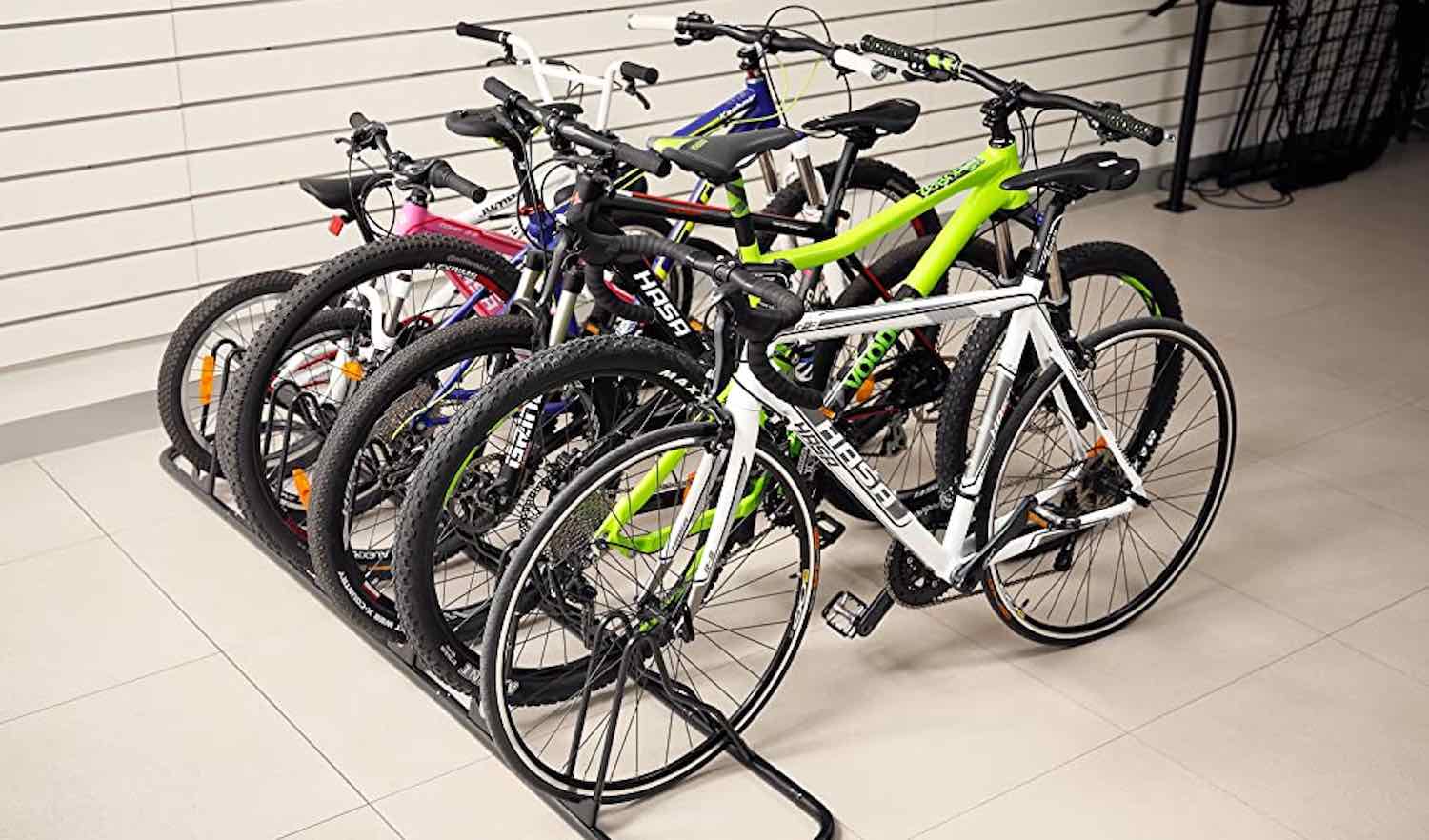
A bike takes up a surprising amount of ground. Lying on its side it eats about two square metres. Standing on a kickstand it is worse, because nothing can go near it without knocking it over. Put two bikes in a single garage alongside a car, a bin, a lawnmower and the usual pile of boxes, and you end up shuffling things sideways every time you want to get anything out.
The floor is also the worst place for the bike itself. It gets knocked, scraped by car doors, leaned on, and in a damp garage it sits in whatever water tracks in under the door. Chains rust. Derailleurs get bent by a bike toppling over. Most of the damage a home bike takes has nothing to do with riding it.
Wall space, meanwhile, usually sits empty from waist height upward. That is the gap a vertical bike hanger fills.
How a vertical bike hanger works
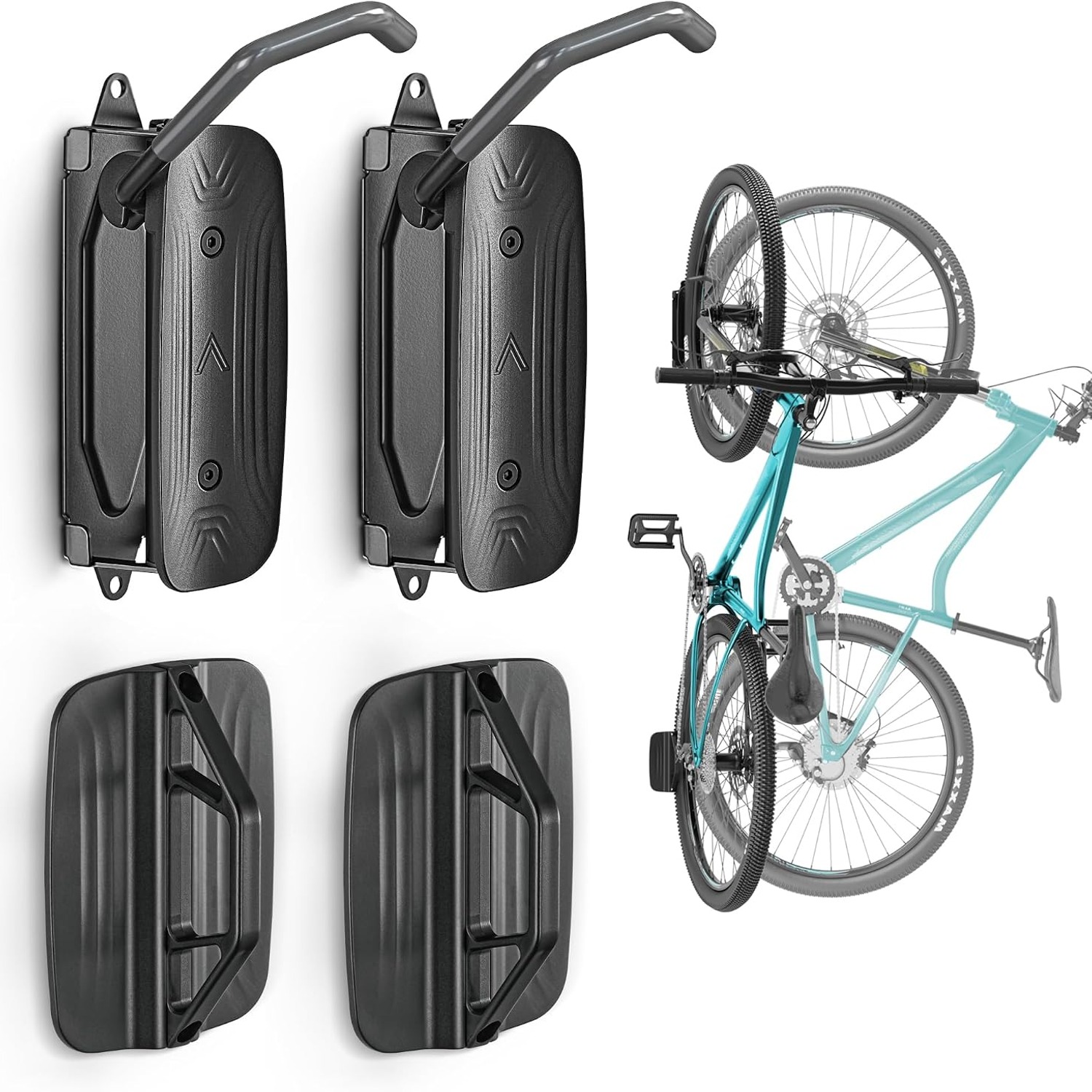
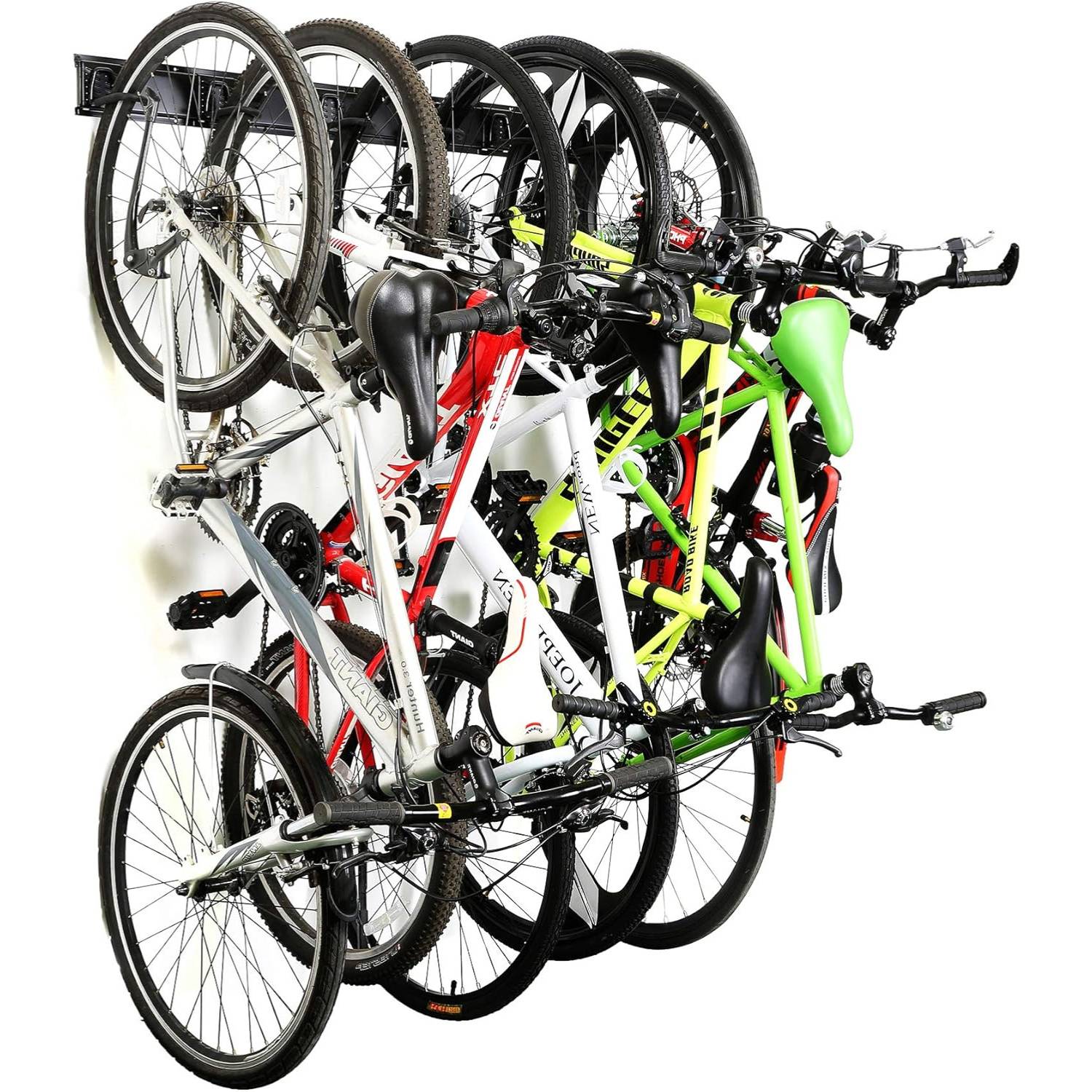
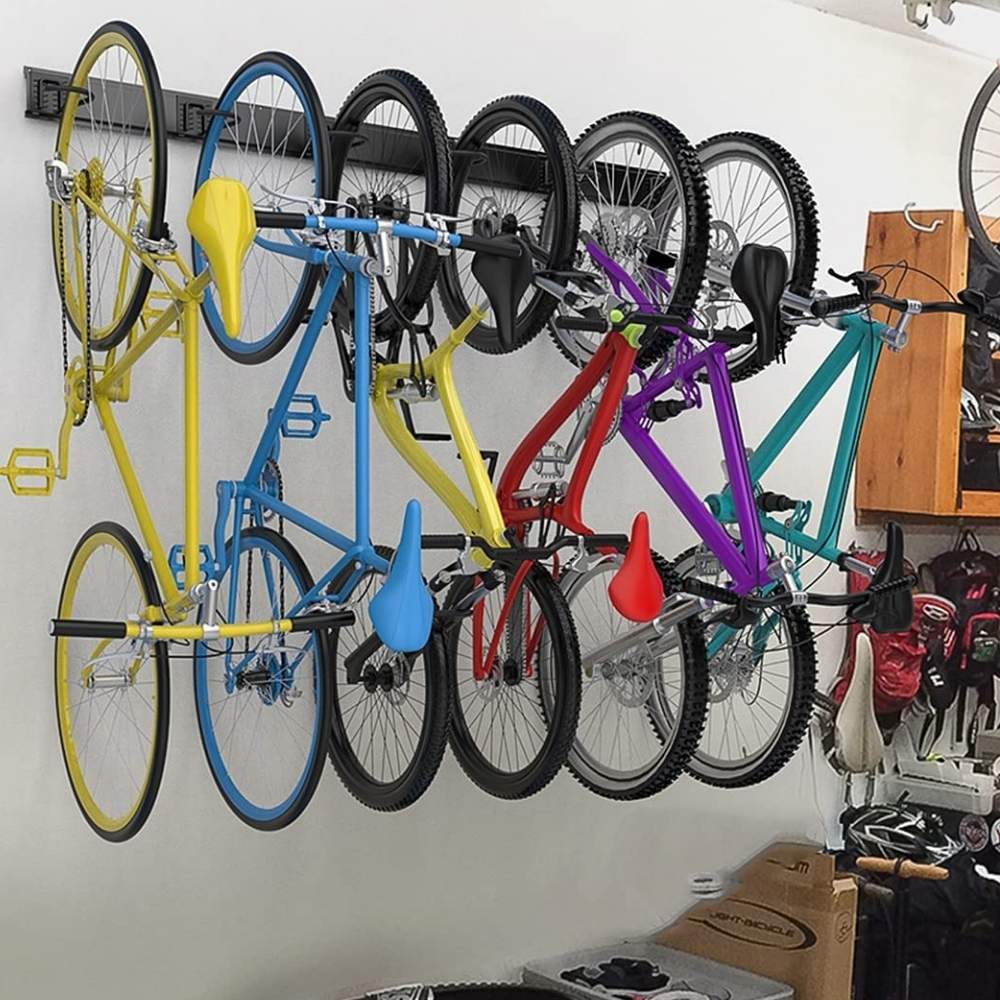
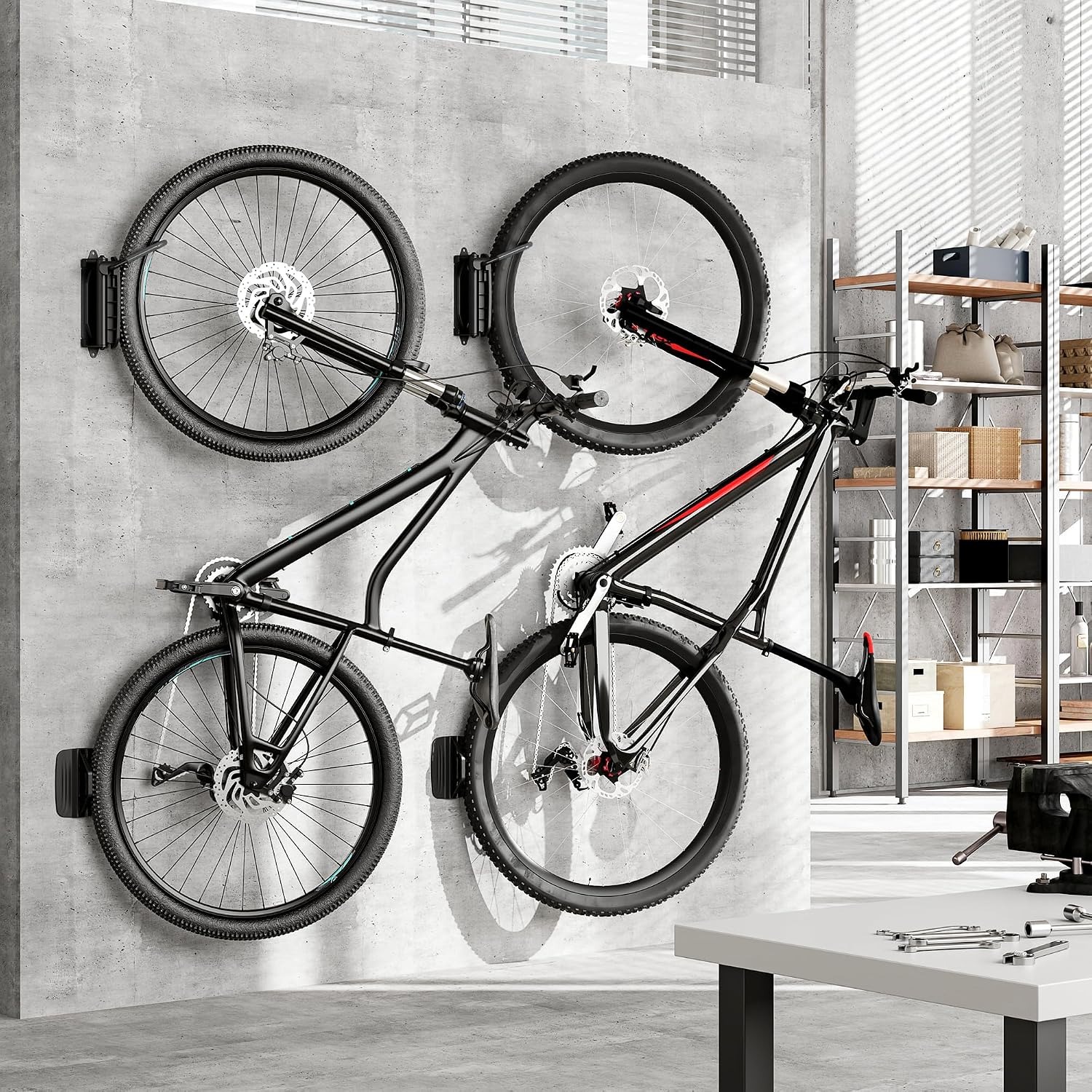
The idea is simple. A steel arm bolts to the wall, ending in a cradle shaped to take a wheel. You lift the bike, hook the front wheel into the cradle, and let go. The bike hangs nose-up with the rear wheel a few centimetres off the ground. Its whole footprint shrinks to roughly the width of the handlebars.
That part is standard. What separates a good garage bike wall hook from a basic one is whether it swivels.
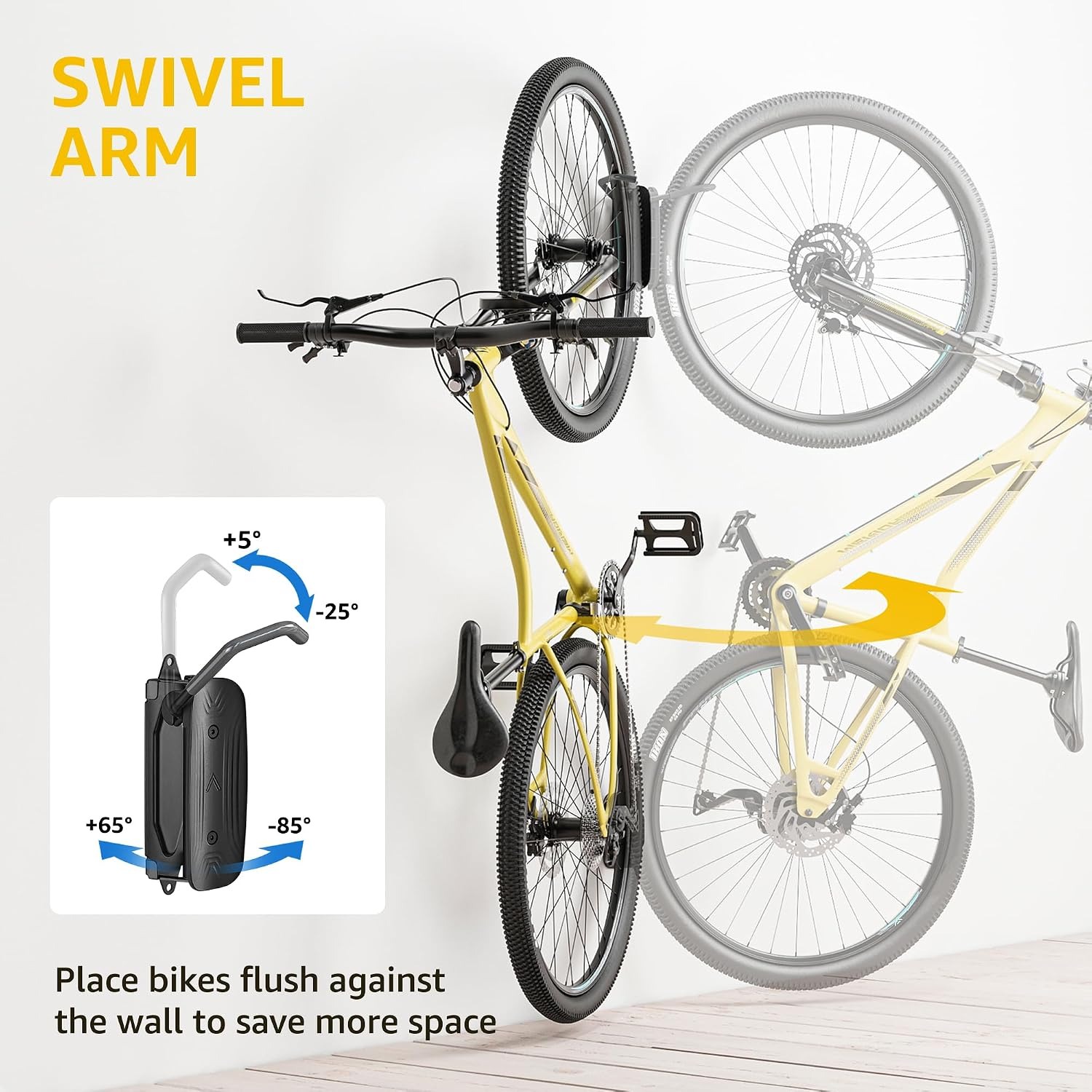
A fixed hook holds the bike perpendicular to the wall, sticking straight out into the room by the length of the bike's own width plus the pedals. In a tight garage that is still in the way. A swivel mount lets you turn the hung bike left or right until it lies almost parallel with the wall. This mount gives 150 degrees of movement, 65 degrees one way and 85 degrees the other, on a rolling system. You hang the bike centred, then push it sideways with one hand.
The practical result is a car door that opens all the way. If you have ever squeezed out of a driver's seat sideways because a bike was in the way, that is the problem being solved.
Load, materials and what the numbers mean
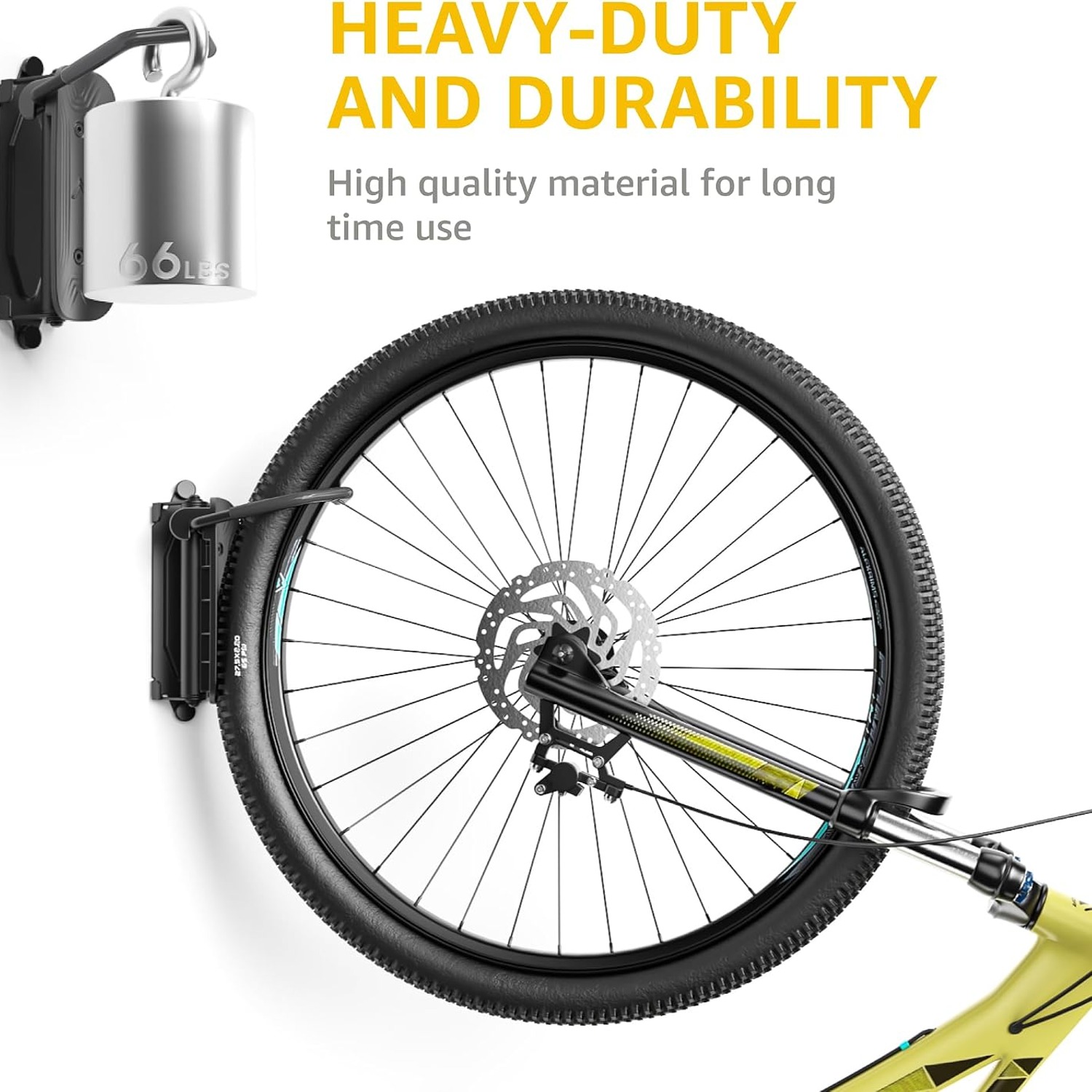
This mount is alloy steel with a powder-coated finish. Powder coating is a dry finish baked on rather than sprayed wet, and it gives a harder, more even surface than paint. It is the reason the listing describes the mount as rust resistant, which matters in a garage that gets condensation.
Each hook is rated to 30 kg. To put that in context, a typical road bike is 8 to 10 kg, a hardtail mountain bike is 12 to 15 kg, and a common commuter e-bike runs 20 to 25 kg with the battery in. So 30 kg is generous for almost everything. The exceptions are e-cargo bikes and some heavy full-suspension electric models, which can get close or go over. If your bike is in that category, weigh it before you buy rather than hoping.
One bike per hook. The rating is per hook, not per pack, and the cradle takes a single wheel.
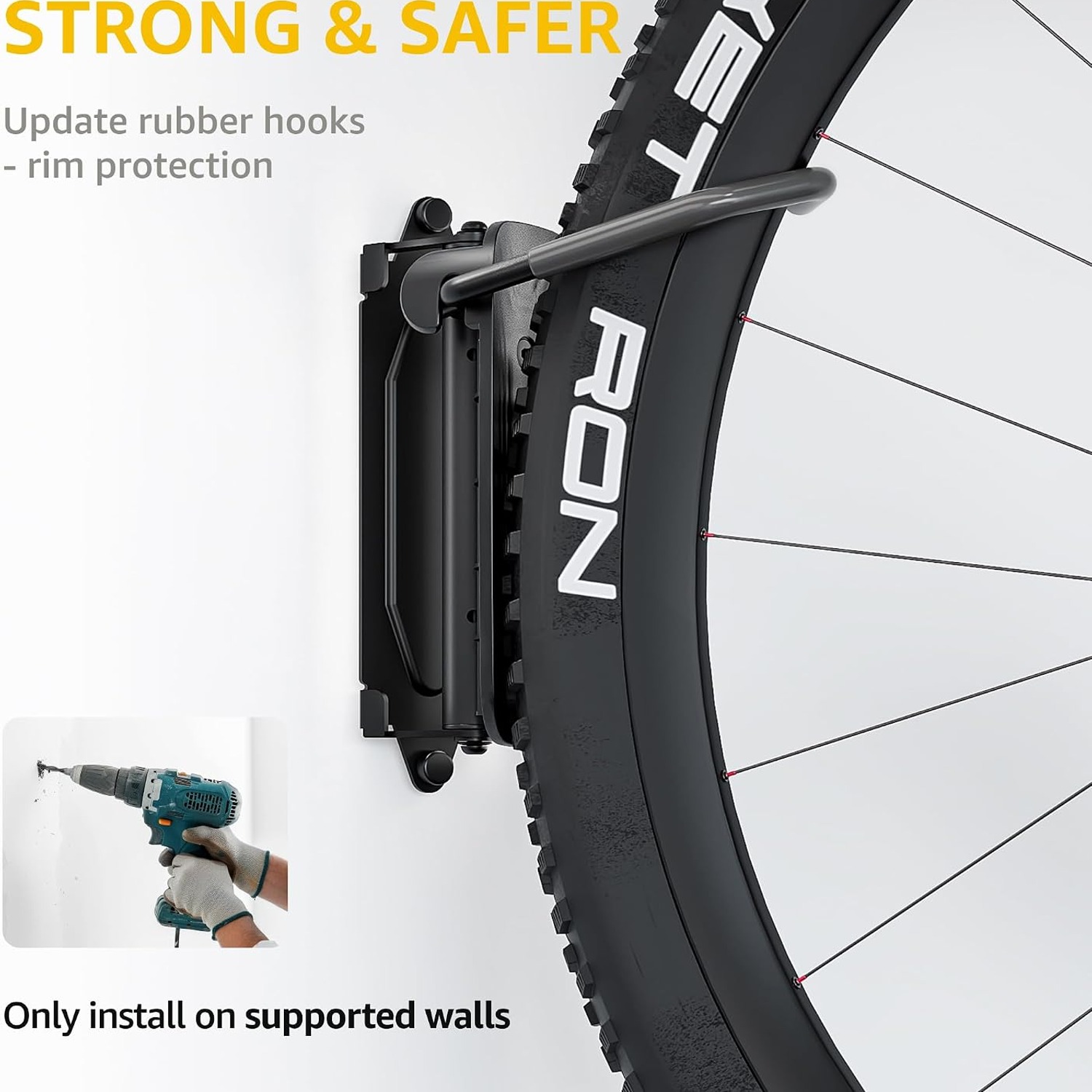
The cradle itself is rubber coated. This spreads the load across the rim rather than pressing bare metal into it, and it stops the hook scratching anodised or painted rims. There is also a stopper that the tyre rests against, which keeps the tyre off your wall paint and stops the bike swinging into the plaster every time someone walks past.
The measurement that decides everything
Before anything else, measure your tyre. This is where most returns come from with any wall mounted bike rack.
Two numbers matter. First, the height from the top of the tread down to the hub, which needs to be 8 cm or less. Second, the tyre width, which needs to be 9 cm or less. Deep-section rims over 90 mm will not sit in the cradle. Neither will fat-bike tyres, which are often 10 cm or more across.
Standard road, gravel, hybrid, touring, cyclocross, cruiser, BMX, kids and most mountain bike tyres all fit comfortably inside those figures. Bikes with mudguards are fine too, though it is worth doing a dry fit before you tighten everything, because some mudguards sit very close to the tyre and can catch on the cradle lip.
Measure with a tape, not by eye. A tyre that looks chunky might be 6 cm wide, and a road tyre on a deep aero rim might be the one that fails the test.
Where to put it, and what you can bolt it to
This is a load-bearing fixing, so the wall matters more than the mount.
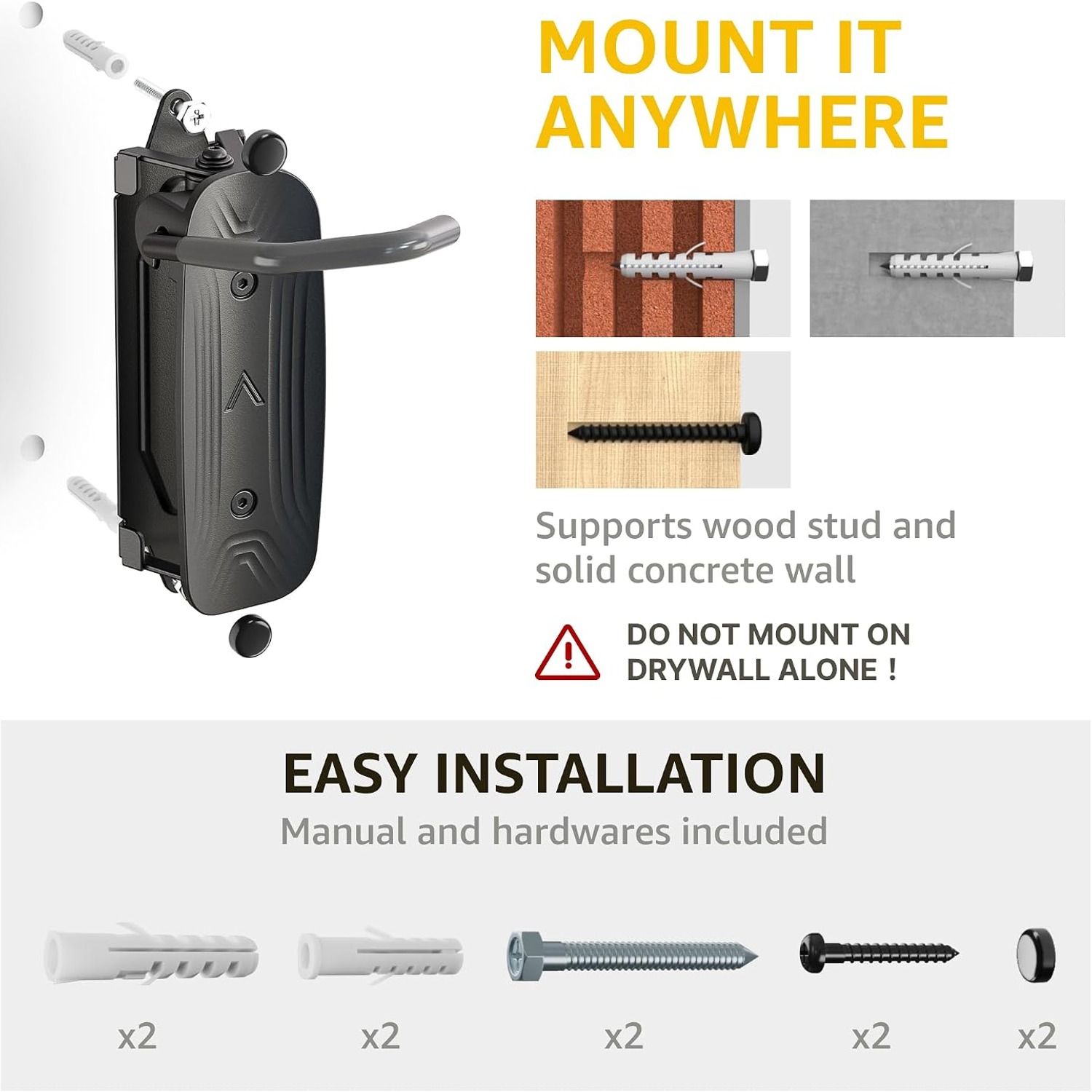
Timber stud walls are fine as long as you hit the stud. Plasterboard on its own is not. No anchor rated for a picture frame is going to hold a 25 kg e-bike swinging on a lever arm, and the instructions are clear on this point. Find the stud with a stud finder, mark the centre, and drill there.
Concrete, brick and masonry are the easiest surfaces because the whole wall is solid. The pack includes bolts for these as well as screws for timber studs, so you are covered either way.
For height, the usual method is to hold the bike up by its front wheel against the wall and mark where the cradle needs to land so the rear tyre clears the floor by a few centimetres. On most adult bikes that lands the hook somewhere near head height. Go a little higher if you want to store a toolbox or tyres underneath.
If you are fitting both mounts in the pack for two bikes, stagger the heights by 20 to 30 cm. The handlebars then sit at different levels and the bikes can be spaced much closer together. Side by side at the same height, you need enough gap that the bars and pedals do not clash.
Who this suits
Garage owners sharing space with a car get the most from the swivel. So do people in narrow sheds, where the usable room runs along one wall.
Apartment and unit dwellers are the other obvious group. Indoor bike storage in a flat is nearly always a wall problem, and a hanger in a hallway, spare room or balcony nook is the only way to keep a bike inside without it dominating the room. Check your lease before drilling if you rent.
Families do well out of the two-pack. One hook low for a child's bike, one higher for an adult, and the floor stays clear.
It suits people who ride regularly, too. A bike that is easy to grab gets ridden. One buried behind boxes does not.
Keeping it in good shape
There is not much to do. Wipe the arm and bracket with a dry or slightly damp cloth when dust builds up. Skip solvents and abrasive pads, which will dull the powder coat over time. The one part worth a bit of attention is the rubber cradle, because grit trapped there sits directly against your rim.
Every few months, check the mounting screws and give them a turn if they have loosened. Walls settle, timber moves with the seasons, and a quick check costs nothing.
The short version
A swivel bike wall mount gets your bike off the floor and turns it flat against the wall, which is the difference between storing a bike and merely moving the problem. This one is alloy steel with a powder-coated finish, rated at 30 kg per hook, with 150 degrees of rotation and a rubber-lined cradle to look after your rim.
Two things decide whether it will work for you. Your tyre must be no more than 8 cm from tread to hub and no more than 9 cm wide, and your wall must be masonry or have a timber stud you can reach. Get those two right and the rest is a drill, a few screws and about five minutes a hook.
You get two mounts in the pack, so that is two bikes off the garage floor in one afternoon.